


Best Litecoin & Dogecoin Miners in 2026: Top Scrypt ASIC Miners

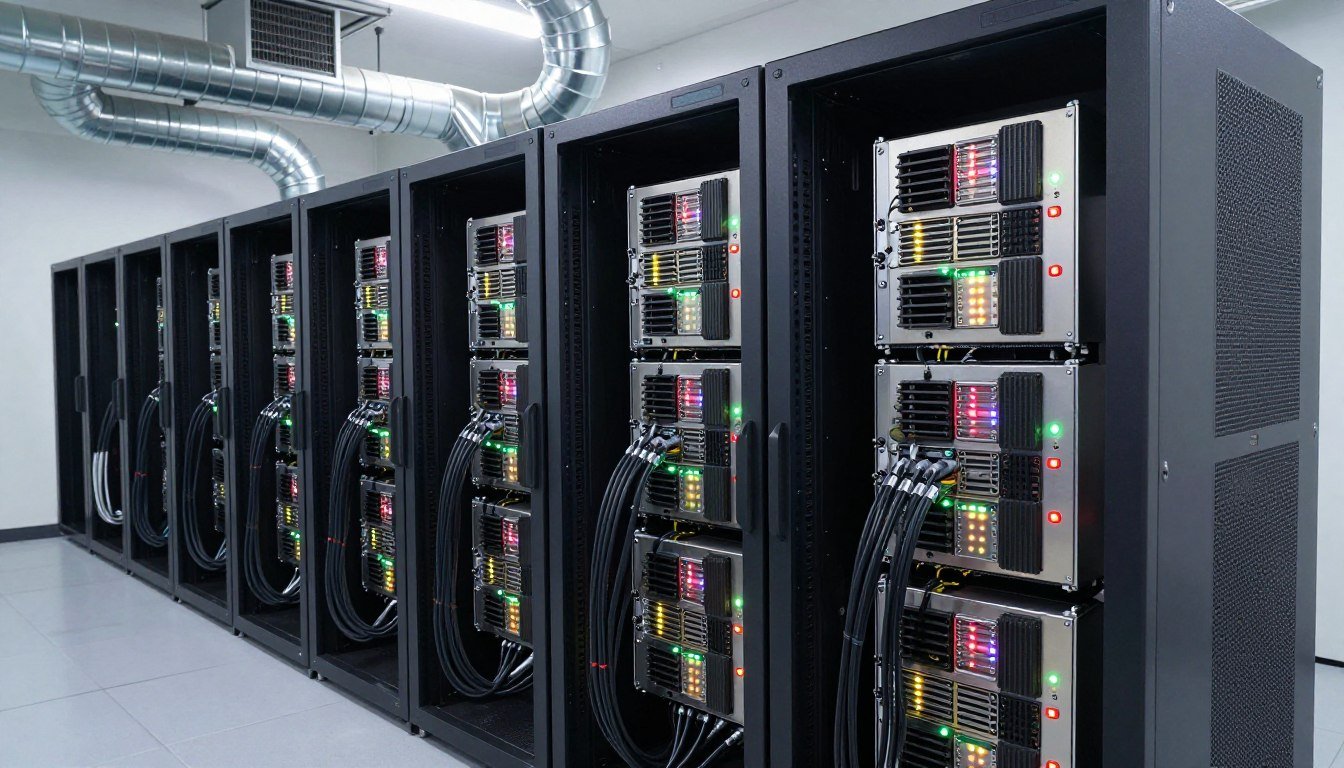
The best Litecoin & Dogecoin miners in 2026 combine high raw hashrate with low energy consumption per gigahash, maximizing share submissions across auxiliary proof-of-work networks. Modern Scrypt application-specific integrated circuits (ASICs) target merged mining, enabling operators to secure the Litecoin blockchain while receiving simultaneous Dogecoin block rewards. Top-tier machines feature durable power supplies, advanced semiconductor nodes, and adaptable thermal management systems suitable for variable operating environments.
Selecting the right Scrypt mining rig depends on electrical infrastructure, acoustic tolerance, available ventilation, and prevailing electricity rates. Commercial deployments prioritize maximum computation density, whereas residential installations require low acoustic output and standard residential voltage compatibility. Evaluating hardware specifications against operational limitations helps maintain positive cash flow despite fluctuating token valuations and shifting network difficulty.
How Scrypt ASIC Mining and Merged Mining Function
Mining Litecoin and Dogecoin relies on the Scrypt proof-of-work algorithm, originally engineered to resist basic hardware acceleration through memory-intensive computational requirements. Specialized Scrypt ASICs now dominate the sector, employing dedicated silicon custom-built to calculate Scrypt hashes thousands of times faster than general-purpose computer processors. These dedicated computing units execute repetitive mathematical equations to discover valid block headers that fulfill the consensus difficulty threshold established by the network.
The economic viability of Scrypt hardware stems largely from merged mining, formally known as Auxiliary Proof-of-Work (AuxPoW). Under this consensus mechanism, miners submit work completed on the primary Litecoin network to validate transactions on the auxiliary Dogecoin blockchain without expending extra computational cycles or electrical energy. A single computational calculation provides valid proofs for both blockchains simultaneously, generating mining rewards denominated in both LTC and DOGE tokens.
Mining pools coordinate this dual validation structure by bundling transaction blocks from both networks into an integrated job dispatched to connected ASIC rigs. The miner processes hashes against the difficulty target, and the pool splits the verified work to claim rewards from both networks. This dual-revenue architecture provides an essential buffer against price volatility in either asset, establishing Scrypt mining as an integrated two-token ecosystem.
Auxiliary Proof-of-Work allows ASIC machines to calculate a single Scrypt hash that validates blocks on both the Litecoin and Dogecoin networks simultaneously without drawing supplementary electrical wattage.
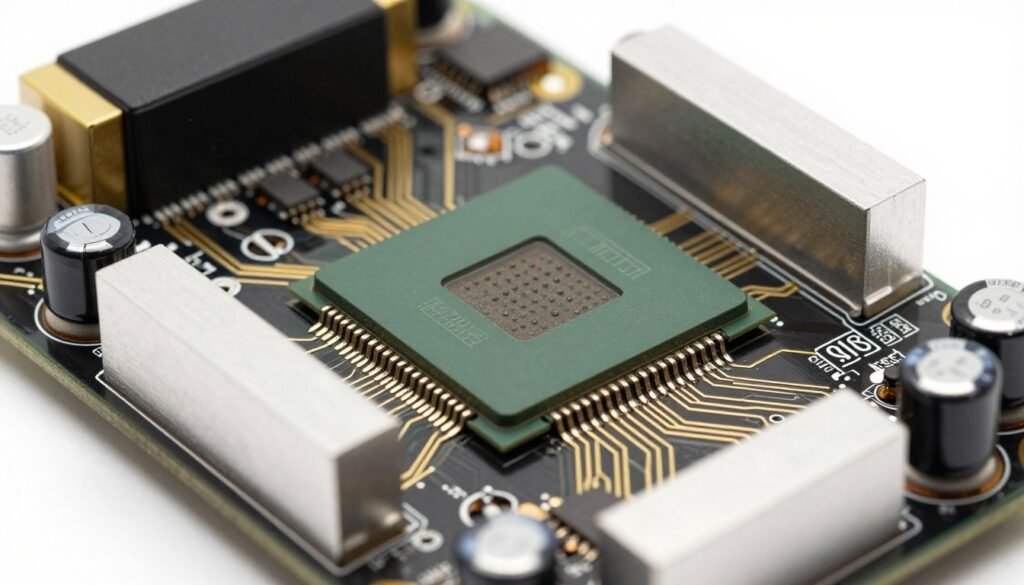
Electricity Costs and Scrypt Mining Profitability
Operational expenditure in proof-of-work mining is dominated by continuous electrical power consumption. Because Scrypt ASICs draw substantial wattage around the clock, local electricity rates represent the single largest variable determining daily cash margins. High-efficiency machines converting electrical input into maximum hash output cushion operators against compressed revenue periods caused by upward difficulty adjustments.
Hardware power efficiency is expressed in joules per gigahash (J/GH) or watts per gigahash (W/GH). A lower numerical rating indicates that the machine requires less electrical energy to produce a given volume of computational work. When network difficulty climbs, less efficient units risk reaching their economic break-even threshold where electricity consumption costs exceed the market value of the harvested LTC and DOGE rewards.
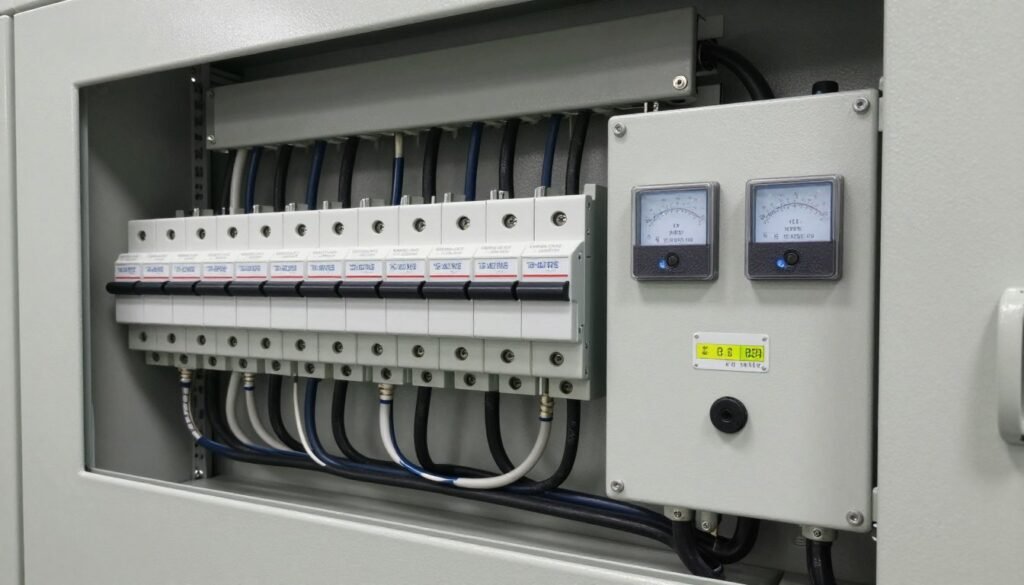
Hardware prices, equipment availability, network hash difficulty, and cryptocurrency token valuations fluctuate continuously across market cycles. Prospective operators must calculate operating overhead using their verified utility rates before acquiring hardware, rather than presuming constant baseline returns. Stable power delivery, appropriate circuit breakers, and adequate exhaust ventilation also prevent premature thermal throttling that diminishes effective hashing speeds.
Mining yields fluctuate with shifting network difficulty and token valuations; confirm local electric utility rates and operating capacity before committing capital, as operational returns are never static.
Comparison of Top Scrypt ASIC Miners for 2026
Comparing baseline specifications across current Scrypt hardware reveals sharp distinctions in power draw, acoustic footprint, and computational density. The table below outlines key operational parameters for the leading Scrypt ASIC units available on the market.
| Miner Model | Hash Rate | Power Draw | Efficiency | Noise Level | Cooling Type | Intended Operating Space |
| Elphapex DG1+ | 14.4 GH/s | 3950 W | 0.27 J/GH | 75 dB | Dual Fans | Commercial facilities and dedicated sheds |
| Antminer L9 | 16.0 GH/s | 3360 W | 0.21 J/GH | 76 dB | Dual Fans | Industrial farms and sound-dampened data centers |
| Elphapex DG Home 1 | 2.6 GH/s | 620 W | 0.24 J/GH | 48 dB | Hydro Air | Residential interiors and home workshops |
| Fluminer L2 Pro | 11.5 GH/s | 3400 W | 0.30 J/GH | 75 dB | Dual Fans | Dedicated outbuildings and colocation racks |
| Mini-DOGE III | 0.7 GH/s | 400 W | 0.57 J/GH | 35 dB | Single Fan | Desktops and everyday residential spaces |
Editor’s Choice: Elphapex DG1+ Review and Specifications
The Elphapex DG1+ stands out as our Editor’s Choice recommendation for Scrypt mining due to its exceptional balance of high sustained computational throughput, proven operational stability, and resilient thermal engineering. Delivering 14.4 GH/s of hashing power while maintaining an energy efficiency profile of approximately 0.27 J/GH, this miner presents a robust foundation for long-term merged mining strategies. The structural chassis incorporates reinforced aluminum housing paired with commercial-grade high-static-pressure cooling fans that resist dust accumulation.
Operating the Elphapex DG1+ requires a dedicated 220V to 240V power circuit capable of supporting roughly 3950 watts of continuous electrical load. Because high-performance Scrypt chips generate substantial heat, the unit utilizes dual intake and exhaust fans spinning at elevated RPMs, producing roughly 75 decibels of operational noise. The integrated management firmware offers granular monitoring over individual hashboard operating temperatures, automatic frequency scaling, and dynamic fault detection to prevent overheating.
For miners operating inside dedicated mining spaces, sound-insulated garages, or commercial colocation facilities, the DG1+ provides reliable hardware availability and straightforward maintenance. The power supply sits integrated directly atop the chassis, reducing external wiring complexity and lowering contact resistance. Its combination of raw hash density and dependable component sourcing makes it an adaptable choice for modern Scrypt operations.
Advantages
- High computational output reaching 14.4 GH/s on Scrypt networks.
- Advanced onboard telemetry monitors individual board temperatures.
- Durable commercial-grade power supply mounted directly to chassis.
Limitations
- Requires high-voltage 220V-240V industrial or heavy-duty circuitry.
- Substantial acoustic noise makes it unsuited for home living areas.
Check the current price and market availability for the Elphapex DG1+ on Amazon.
Bitmain Antminer L9 Review and Specifications
The Bitmain Antminer L9 serves as a flagship Scrypt mining platform engineered for industrial operations demanding the lowest electrical overhead per computed hash. Achieving an impressive 16.0 GH/s hashrate at an energy consumption of 3360 watts, the Antminer L9 achieves an efficiency rating of 0.21 J/GH. This high efficiency grants operators a critical competitive advantage during compressed market margins and elevated difficulty phases.
To extract optimal hashing output, the Antminer L9 employs high-speed dual exhaust and intake fan configurations that channel air over densely packed internal heat spreaders. The unit generates approximately 76 decibels during normal operation, requiring dedicated sound mitigation or industrial containment racks. The unit mandates a stabilized 200V to 240V power infrastructure, standard in professional data centers but requiring dedicated electrical work in domestic environments.
Firmware architecture within the Antminer L9 features automated protection routines, including real-time voltage regulation and automatic hashboard shutdown if thermal limits are breached. The build quality adheres to industrial data-center standards, featuring reinforced chassis seams and secure Ethernet networking interfaces. Operators seeking the lowest power draw per gigahash in a high-density footprint find the L9 an exceptionally capable machine.
Advantages
- Exceptional energy efficiency rating of approximately 0.21 J/GH.
- Massive 16.0 GH/s computational output simplifies high-density scaling.
- Broad mining pool compatibility across all major Scrypt pools.
Limitations
- Acoustic volume requires isolated data center or outbuilding housing.
- Demands robust 220V electrical infrastructure with dedicated breakers.
Verify current pricing and vendor availability for the Bitmain Antminer L9 directly on Amazon.
Elphapex DG Home 1 Review and Specifications
The Elphapex DG Home 1 redefines residential Scrypt mining by delivering high efficiency in a compact form factor engineered for silent operation. Providing 2.6 GH/s of hashrate while pulling approximately 620 watts from the wall, this machine maintains an efficiency profile of 0.24 J/GH. Unlike industrial miners, the DG Home 1 limits its acoustic footprint to under 48 decibels, making it viable for domestic workshops, garages, or basements.
A key mechanical innovation in the DG Home 1 is its specialized hybrid thermal cooling architecture. Rather than relying entirely on high-RPM screaming axial fans, it combines internal liquid circulation loops with wide-diameter low-noise fans to transfer heat away from the silicon dies. The unit operates smoothly on standard residential 110V to 240V circuits, removing the prerequisite of hiring an electrician for high-voltage panel alterations.
The unit features integrated Wi-Fi and Ethernet connectivity, simplifying physical placement without needing dedicated network cabling runs. The onboard web control interface is approachable for hobbyists while offering advanced telemetry for experienced operators tracking pool shares and rejection rates. For domestic operators seeking exposure to merged Litecoin and Dogecoin mining without the deafening acoustic roar of commercial hardware, this model presents an outstanding choice.
Advantages
- Quiet operation under 48 dB suitable for domestic home environments.
- Compatible with standard household 110V-120V residential outlets.
- Built-in Wi-Fi and Ethernet connectivity options for versatile setup.
Limitations
- Lower aggregate hashrate output compared to commercial miners.
- Higher unit cost per gigahash of raw computational capacity.
Browse current inventory listings for the Elphapex DG Home 1 on Amazon.
Fluminer L2 Pro Review and Specifications
The Fluminer L2 Pro targets mid-scale operations and colocation environments seeking balanced hashrate performance with reliable thermal tolerances. Delivering 11.5 GH/s on the Scrypt algorithm while drawing approximately 3400 watts, this machine maintains an operational efficiency rating near 0.30 J/GH. The physical construction incorporates a solid aluminum casing designed to resist mechanical stress and optimize airflow velocity over internal hash modules.
Thermal cooling relies on heavy-duty counter-rotating fans configured in a push-pull arrangement across the chassis. This setup accelerates heat dissipation from the ASIC microchips, though it generates approximately 75 decibels of noise under standard computational loads. The power unit is securely integrated into the top frame, accepting input voltages between 200V and 240V to ensure clean power delivery without redundant external wiring.
Firmware capabilities include customized power-saving modes that let operators throttle clock frequencies during periods of peak electrical pricing or unseasonable ambient temperatures. Diagnostic monitoring tracks board voltages, fan speeds, and network latency in real time. The Fluminer L2 Pro serves as a dependable mid-tier contender for operators seeking straightforward hardware integration within dedicated facilities.
Advantages
- Substantial 11.5 GH/s output fits medium-scale mining deployments.
- Flexible firmware includes variable low-power operational modes.
- Heavy-duty thermal design withstands warm ambient environments.
Limitations
- Acoustic output of 75 dB precludes deployment in living spaces.
- Requires a 200V-240V power connection and adequate circuit capacity.
Inspect available merchant listings for the Fluminer L2 Pro on Amazon.
Goldshell Mini-DOGE III Review and Specifications
The Goldshell Mini-DOGE III is engineered explicitly for desktop enthusiasts, educational hobbyists, and residential users who prioritize quiet operation and low energy consumption. Producing approximately 0.7 GH/s on the Scrypt algorithm while consuming around 400 watts, this compact miner represents an entry-level entry point into merged mining. Its low noise output of approximately 35 decibels allows continuous operation in an office or bedroom without acoustic distraction.
Built with a compact vertical enclosure, the Mini-DOGE III integrates an internal low-RPM fan that exhausts warm air out the top vent. It operates seamlessly using standard 100V to 240V power supplies, plugging directly into standard wall outlets without requiring breaker upgrades. The system includes integrated Wi-Fi support alongside an Ethernet port, allowing flexible cable-free positioning anywhere within wireless network reach.
While its energy efficiency ratio of roughly 0.57 J/GH is less competitive than industrial units, its modest power consumption keeps electrical additions negligible on domestic bills. The responsive web dashboard simplifies setup, guiding users through pool selection and wallet address configuration within minutes. It serves as an accessible starting point for operators learning the fundamentals of the Scrypt merged mining network.
Advantages
- Near-silent 35 dB sound profile suitable for desks and living spaces.
- Plugs into standard residential 110V household power outlets.
- Convenient wireless network integration eliminates messy network cables.
Limitations
- Modest 0.7 GH/s output yields small daily share contributions.
- Higher energy consumption per gigahash relative to large ASICs.
Review current availability and vendor offerings for the Goldshell Mini-DOGE III on Amazon.
Buyer’s Guide and Hardware Selection Checklist
Selecting an optimal Scrypt ASIC requires matching equipment capabilities against electrical, thermal, and spatial realities. Before purchasing hardware, systematically evaluate the operational factors that determine everyday performance and longevity.
- Assess local electrical supply infrastructure: commercial units pulling over 3000 watts require dedicated 208V to 240V circuits and heavy-gauge wiring, whereas compact domestic miners function on common 110V to 120V household outlets.
- Calculate thermal heat dissipation capacity: high-power Scrypt ASICs output substantial heat equivalent to multiple space heaters, necessitating exhaust fans, dedicated ducting, or dedicated room ventilation.
- Measure acoustic tolerance in the installation area: commercial miners generate 75 decibels or more from high-speed cooling fans, requiring soundproofing or detached outbuildings to prevent noise disruption.
- Evaluate power efficiency ratings in joules per gigahash: lower J/GH ratings preserve operating margins when network difficulty increases or market token prices experience downward pressure.
- Check network connectivity requirements: determine whether the planned location has reliable wired Ethernet connections or requires an ASIC with built-in Wi-Fi hardware.
- Review power supply integration and build quality: models featuring direct-mounted, certified power supplies reduce fire hazards and simplify cable management within equipment racks.
Ready to Launch Your Scrypt Mining Setup?
Explore current stock and delivery options for Scrypt ASIC hardware to expand your Litecoin and Dogecoin mining capacity.
Frequently Asked Questions About Scrypt Mining
Can you mine Dogecoin without mining Litecoin?
Mining Dogecoin independently is technically feasible, but nearly all modern mining pools employ merged mining via Auxiliary Proof-of-Work to mine Litecoin and Dogecoin simultaneously. Because merged mining calculates valid proofs for both blockchains from identical computational work, running merged mining provides two revenue streams without burning extra electricity.
What voltage is required to run high-hashrate Scrypt miners?
Commercial Scrypt miners drawing more than 3000 watts require a dedicated 200V to 240V alternating current electrical circuit. Standard residential 110V or 120V outlets cannot supply sufficient amperage for these high-draw machines without tripping breakers or presenting fire hazards.
How does Scrypt network difficulty affect mining output?
Network difficulty adjusts dynamically based on the total computational hashrate competing across the Litecoin and Dogecoin networks. As more miners deploy hardware, difficulty rises, meaning an individual ASIC earns fewer daily coins unless its hashrate is expanded proportionally.
Can Scrypt ASIC miners be used to mine Bitcoin?
Scrypt ASIC miners cannot compute Bitcoin blocks because Bitcoin operates on the SHA-256 cryptographic algorithm. ASICs contain hardwired silicon chips engineered specifically for a single mathematical algorithm, restricting Scrypt hardware strictly to Scrypt-based coins like Litecoin and Dogecoin.
What is an acceptable operating temperature for a Scrypt ASIC?
Most Scrypt ASICs operate safely with internal silicon chip temperatures between 65 and 80 degrees Celsius. Operating hardware continuously above recommended thermal limits triggers automated emergency shutdowns and accelerates the degradation of internal hashboards.
Final Considerations for Scrypt Mining Hardware
Selecting the best Litecoin & Dogecoin miners in 2026 requires balancing raw computational hashrate against local utility rates, electrical voltage availability, and noise tolerances. Commercial hardware like the Elphapex DG1+ and Antminer L9 delivers industry-leading efficiency for dedicated spaces, while residential models like the DG Home 1 and Mini-DOGE III allow peaceful domestic operation. Aligning equipment specifications with realistic operational budgets supports sustainable merged mining performance across market shifts.