


ASIC Miner Buying Guide 2026: How to Choose the Right Bitcoin Miner

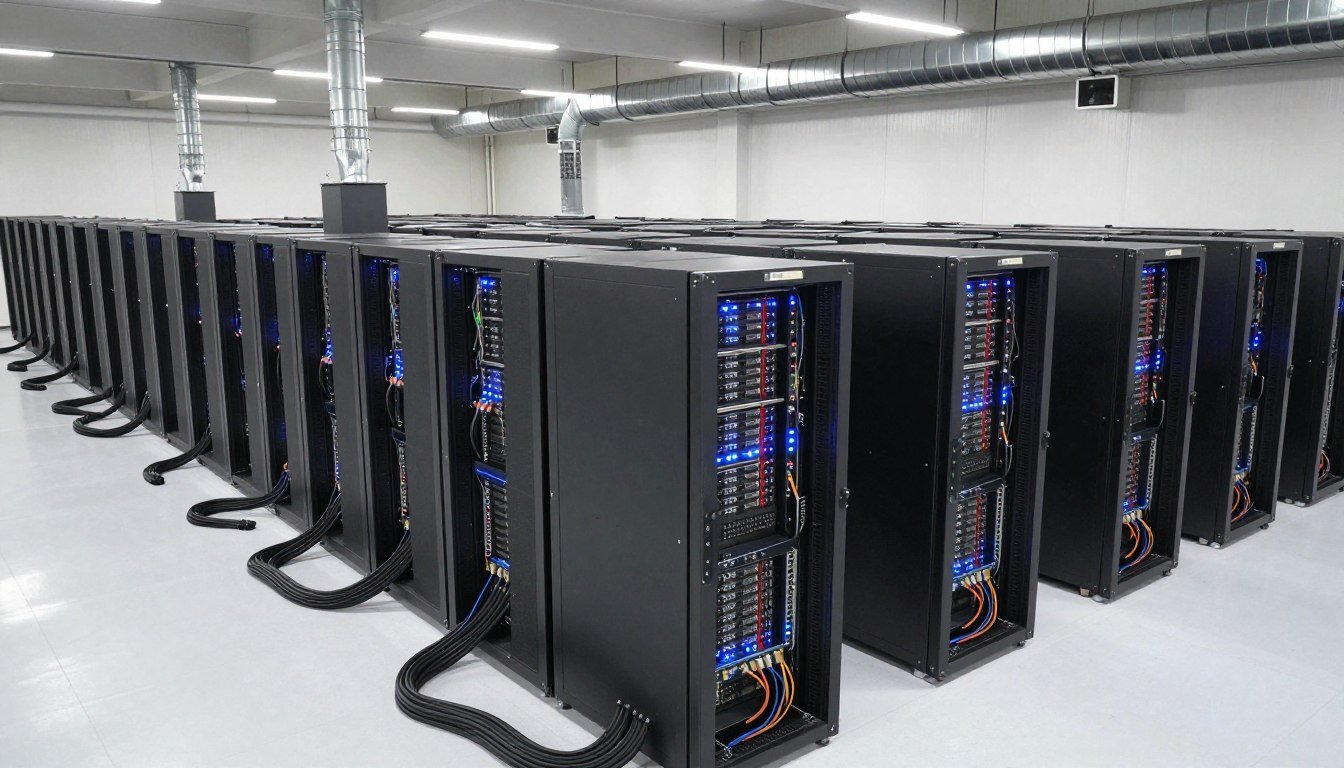
Local power rates, electrical delivery systems, noise constraints, and thermal dissipation capacities decide the appropriate machine choice for any given deployment. Selecting the ideal Bitcoin miner requires examining real-world electrical efficiency, firmware stability, and component durability rather than focusing solely on peak advertised hashrate numbers.
Defining Application-Specific Integrated Circuits in Cryptocurrency Mining
An Application-Specific Integrated Circuit represents a microchip tailored exclusively for a singular computing task rather than general computational workloads. In digital asset mining, these specialized processors execute cryptographic hashing algorithms repeatedly at speeds unattainable by consumer computer hardware.
Standard central processing units and graphics cards retain flexible logic circuits designed to handle operating systems, video rendering, and varied software calculations. An ASIC strips away general-purpose computing transistors to dedicate its entire silicon footprint to calculating cryptographic equations such as SHA-256. This architectural specialization delivers orders of magnitude greater computational throughput per watt of electricity consumed.
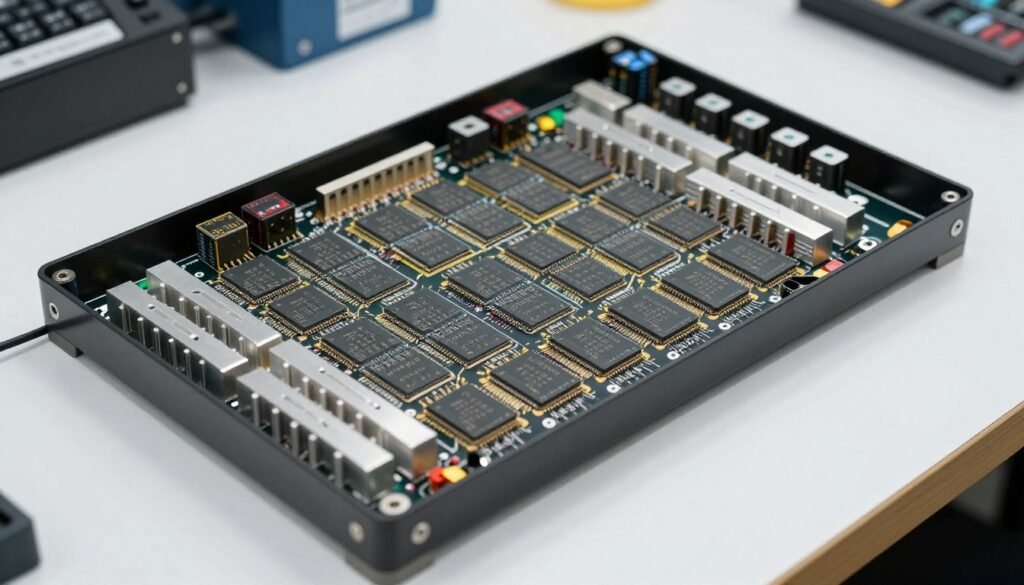
Each Bitcoin mining machine contains dozens or hundreds of identical microchips mounted across multiple circuit boards termed hashboards. These boards interface with an integrated controller that distributes calculation jobs from mining pools, monitors thermal sensors, and manages cooling systems. The focused architecture means an ASIC designed for one cryptographic formula cannot compute another, making architectural alignment essential prior to hardware acquisition.
ASIC microprocessors achieve superior hashing density by hardwiring mathematical functions directly into silicon pathways, eliminating the operating system translation layers found in standard computer processors.
Why Choosing the Right Mining Model Dictates Operational Success
Selecting an appropriate machine model determines whether a deployment remains operationally sustainable through changing difficulty cycles and market fluctuations. Mining hardware represents a long-term capital commitment that consumes continuous electrical current throughout its active production life.
Cryptocurrency networks automatically adjust computational difficulty based on total global participation, meaning that hardware delivers diminishing coin production over extended timeframes. Machines with poor energy efficiency face operational shutdown when revenue drops below the cost of consumed electricity. Conversely, modern high-efficiency hardware remains productive through adverse market shifts by keeping marginal energy expenses low.
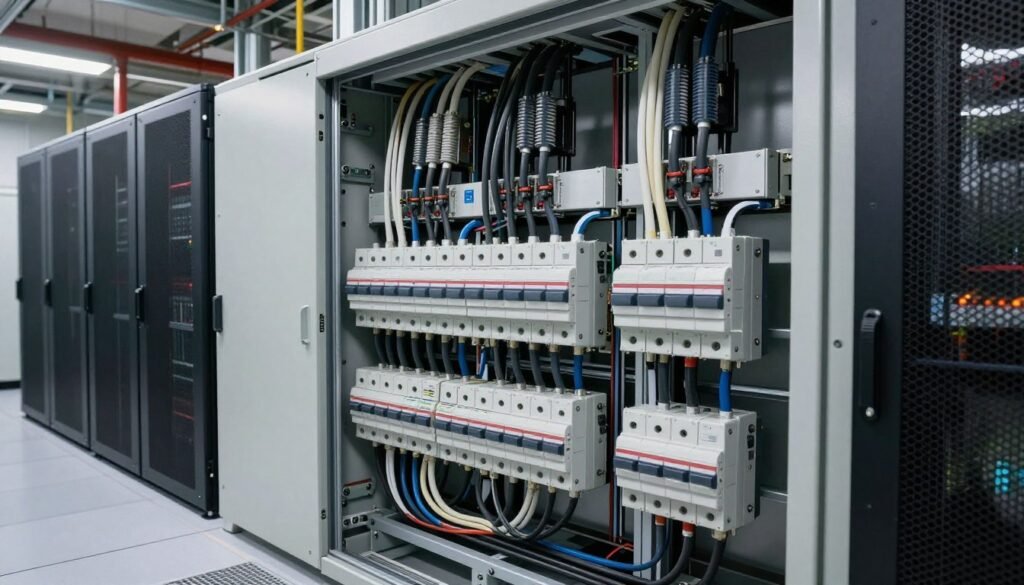
Facility constraints further dictate hardware suitability, as commercial mining rigs cannot simply plug into standard domestic electrical sockets without tripping circuit breakers. Hardware footprint, acoustic output, voltage demands, and exhaust heat vary substantially across air-cooled, hydro-cooled, and immersion-ready platforms. Procuring models that fit existing ventilation and electrical infrastructure prevents expensive facility modifications and operational delays.
A machine that produces high hashrate but operates with high power consumption often yields lower net margins than a moderately powered unit running on optimal energy efficiency.
Twelve Essential Criteria for Evaluating Mining Hardware
Thorough evaluation of mining machinery requires balancing mechanical, electrical, environmental, and financial attributes against facility parameters. Examining each operational factor helps prospective operators determine true ownership expenses before placing purchase orders.
- Hash rate: Total computational guesses processed per second, measured in terahashes or gigahashes, determining baseline production capability.
- Power consumption: Continuous electrical wattage pulled from the wall outlet during normal operation under sustained load.
- Energy efficiency: The direct ratio of electricity consumed per unit of hashing output, expressed in joules per terahash.
- Mining algorithm: The underlying mathematical cryptographic function hardwired into the processing silicon, such as SHA-256 or Scrypt.
- Supported cryptocurrencies: The specific proof-of-work digital assets that utilize the hardware’s embedded cryptographic formula.
- Cooling design: Factory-engineered thermal dissipation mechanisms, categorized into traditional forced-air fans, enclosed water loops, or dielectric immersion tanks.
- Noise production: Acoustic disturbance levels generated by cooling systems, commonly ranging from moderate home levels to deafening industrial factory volumes.
- Electrical requirements: Operating voltage and amperage thresholds demanded by internal power supplies, typically requiring dedicated high-voltage lines.
- Installation requirements: Spatial clearances, intake air filtration standards, ducting paths, and humidity control parameters for the operating space.
- New versus used condition: Trade-offs between factory freshness, operating history, thermal wear, and initial acquisition expense.
- Warranty and return policies: Manufacturer or vendor backing covering board failures, power supply defects, and transit damage.
- Price and market availability: Immediate hardware procurement costs, batch delivery timelines, and geographic import tariffs.
Comparing these twelve points prevents common procurement mismatches where buyers purchase powerful machines without having the electrical capacity or acoustic insulation to run them. Operational viability demands that every criterion aligns with the physical realities of the intended operating location.
Mining Algorithms: SHA-256 for Bitcoin and Scrypt for Litecoin and Dogecoin
ASIC microprocessors are permanently tuned to a specific mathematical hashing structure during semiconductor fabrication. Selecting mining equipment requires understanding the core operational differences between cryptographic algorithms and the networks they support.
The SHA-256 algorithm processes mathematical calculations through fixed computational rounds requiring intense arithmetic logic, forming the foundation of the Bitcoin network. A dedicated SHA-256 miner focuses entirely on rapid mathematical iteration, producing trillions of calculations per second with dense silicon configurations. SHA-256 machines represent the largest segment of commercial digital asset mining hardware worldwide.
In contrast, the Scrypt algorithm incorporates high memory access demands into its proof-of-work protocol, originally designed to resist pure computation hardware. A Scrypt miner pairs processing cores with high-speed memory buffers to handle simultaneous memory-intensive operations. These units typically mine Litecoin while simultaneously receiving Dogecoin rewards through auxiliary proof-of-work mechanisms without dividing computing power.
SHA-256 Architecture
- Secures the Bitcoin network
- Calculates pure arithmetic logic
- Measured in terahashes per second
- Demands intense silicon density
Scrypt Architecture
- Powers Litecoin and Dogecoin
- Integrates rapid memory caching
- Measured in megahashes or gigahashes
- Enables simultaneous merged mining
Attempting to redirect hardware across disparate algorithms remains physically impossible due to non-programmable logic gates etched into the silicon. Operators must select their target coin ecosystem before choosing between SHA-256 and Scrypt hardware platforms.
Thermal Management: Air, Hydro, and Immersion Cooling Systems
Continuous electrical computation generates substantial thermal energy that must dissipate rapidly to maintain silicon operational thresholds. Hardware manufacturers produce distinct thermal management architectures suited to different operational scales, climates, and acoustic environments.
Forced Air Cooling
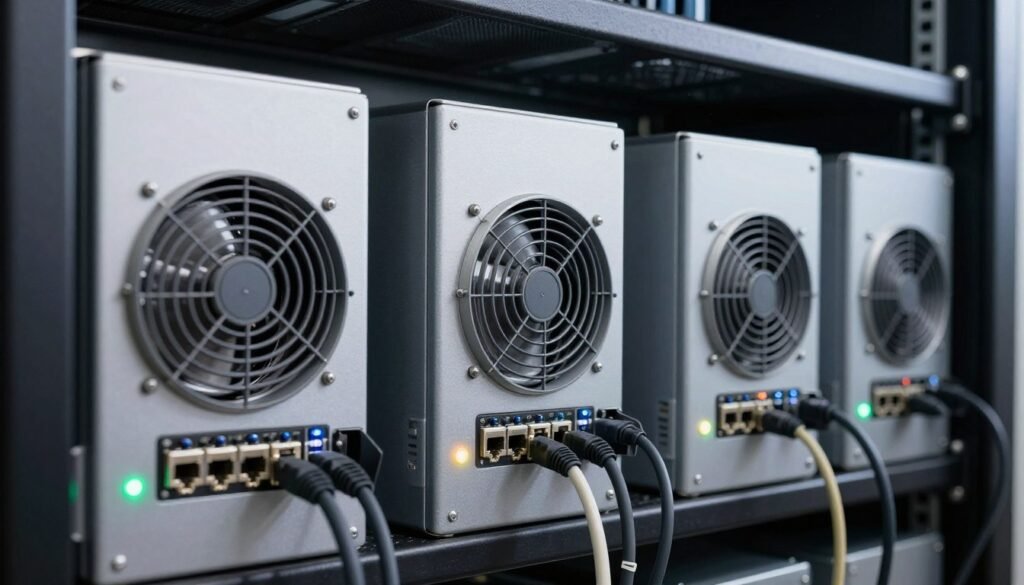
High-rpm intake and exhaust fans draw ambient air across aluminum heatsinks mounted to hashboards. This design requires minimal initial infrastructure but creates intense acoustic noise and pulls environmental dust into internal components.
Hydro Loop Cooling
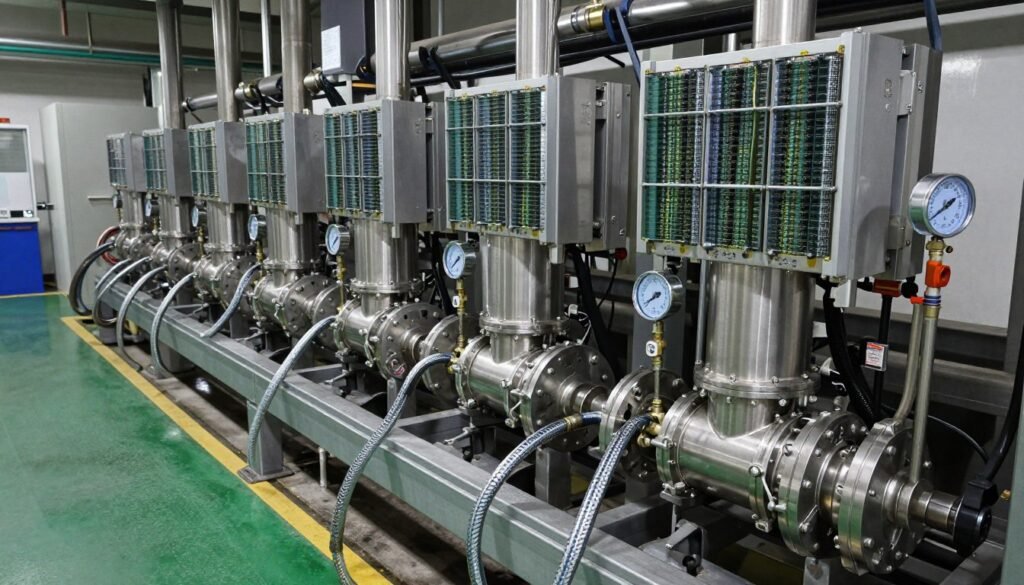
Deionized liquid circulates through closed cold plates clamped directly over processing chips, transferring heat to external dry coolers or water manifolds. Hydro setups virtually eliminate fan noise and offer exceptional thermal stabilization.
Dielectric Immersion
Uncased hardware submerges entirely in non-conductive synthetic fluid that circulates through plate heat exchangers. Immersion eliminates thermal cycling stress, eliminates ambient dust contact, and allows significant component overclocking.
Standard forced-air systems dominate modular container deployments and purpose-built warehouses located in arid, cool climates. These installations require continuous air filtration arrays to stop particulate accumulation, which insulates components and causes premature thermal throttling.
Hydro and immersion systems demand higher initial infrastructure investments, including fluid pumps, external cooling radiators, expansion tanks, and specialized plumbing. However, liquid architectures permit direct heat capture for domestic space heating, industrial drying, or agricultural greenhouse climate control, converting computational exhaust into useful thermal energy.
Evaluating Mining Machines Beyond Raw Hashrate Metrics
Novice buyers frequently judge equipment solely by advertised nominal hashrate, overlooking underlying technical factors that govern machine longevity and operating margins. A comprehensive evaluation analyzes how efficiently a machine converts electricity into valid cryptographic submissions.
Energy efficiency, expressed as joules per terahash, indicates the quantity of electrical power required to perform one trillion computational checks. A lower joule-per-terahash figure denotes superior engineering that preserves operational margins during market contractions. Machines operating at higher efficiency ratings can remain online longer as network difficulty expands over multi-year cycles.
Physical construction and component quality also influence lifetime production value across challenging operating environments. Aluminum casing rigidity, power supply reserve capacity, heat sink surface area, and solder alloy resistance against thermal fatigue differentiate premium hardware from budget models. Evaluating how firmware manages board-level balance during heat waves reveals whether a machine will throttle output or maintain stable performance.
High-Efficiency Architecture
- Lower ongoing utility overhead per hash produced
- Extended operational viability through difficulty increases
- Reduced thermal output per unit of computation
- Superior secondary market resale retention
High-Hashrate Inefficient Units
- Excessive monthly electrical utility expenses
- Vulnerability to immediate curtailment during market dips
- Higher heat output demanding extensive cooling airflow
- Accelerated economic obsolescence over time
Power supply tolerances and voltage conversion efficiencies directly affect long-term reliability. Integrated power units engineered with heavy-duty capacitors withstand minor voltage sags on commercial lines without dropping hashboards offline.
Technical Specifications Across Benchmark Mining Machines
Modern commercial mining relies on proven platforms manufactured by industry leaders such as Bitmain and MicroBT, alongside emerging semiconductor entrants like Bitdeer. Comparing verified engineering parameters illustrates the performance envelope of contemporary hardware.
Specifications fluctuate between production batches, aftermarket control board firmware, supply voltage variations, and ambient intake air temperatures. The following table highlights factory baseline specifications for recognized benchmark machines operating within standard operational parameters.
| Model Name | Algorithm | Cooling Type | Nominal Performance |
| Antminer S21 | SHA-256 | Air Cooled | Delivers 200 TH/s at roughly 3500 watts, providing approximately 17.5 J/TH efficiency. |
| Antminer S21 Hydro | SHA-256 | Hydro Cooled | Generates 335 TH/s at 5360 watts, achieving ultra-dense 16.0 J/TH performance. |
| Antminer S19j Pro | SHA-256 | Air Cooled | Produces 100 TH/s drawing 3050 watts, representing a standard 30.5 J/TH fleet workhorse. |
| Antminer T19 | SHA-256 | Air Cooled | Achieves 88 TH/s consuming 3150 watts, serving as an accessible entry-tier unit. |
| WhatsMiner M50S | SHA-256 | Air Cooled | Supplies 126 TH/s at 3276 watts, known for robust voltage stability and steel casing. |
| SealMiner A2 Pro | SHA-256 | Air Cooled | Outputs 255 TH/s at roughly 4200 watts, offering high throughput for dense racks. |
| Antminer L9 | Scrypt | Air Cooled | Delivers 16 GH/s consuming 3360 watts, specialized for Litecoin and Dogecoin. |
Bitmain Antminer models frequently emphasize maximum silicon efficiency ratings, while MicroBT WhatsMiner units utilize durable aluminum tube heat dissipation and internal power regulation to maintain reliability under challenging electrical conditions. Operators should account for a standard operational margin of several percentage points above or below nominal ratings depending on line quality and thermal limits.
Sourcing Hardware: New Versus Used Mining Units
Procuring mining equipment involves choosing between brand-new factory inventory and tested pre-owned machines. Each route balances capital expenditure against operational reliability and remaining hardware lifespan.
Factory-new machinery provides full semiconductor life, pristine thermal interfaces, and direct manufacturer warranties. However, brand-new releases command high price premiums that require extended continuous operation to recoup. When exploring specialized hardware options, reviewing inventory across Bobbie Hash Matrix allows operators to assess both modern flagship platforms and tested secondary hardware.
Secondhand hardware offers significantly lower upfront capital outlay, enabling faster equipment payback under favorable power rates. Yet, purchasing unverified used hardware carries risks of worn fan bearings, degraded thermal paste, or damaged silicon chips caused by prior overheating. Sourcing pre-owned equipment through professional suppliers who bench-test units under realistic load conditions mitigates these mechanical risks.
Factory-New Hardware
Delivers original thermal pad elasticity, zero operating hours, and standard manufacturer warranty backing. Ideal for large-scale institutional sites prioritizing maximum runtime and predictable multi-year operation.
Refurbished & Tested Units
Presents a lower capital barrier for expanding fleets or testing home infrastructure. Dependable vendors verify hashrate stability, inspect circuit integrity, and refresh fans before secondary deployment.
Evaluating vendor return terms and warehouse testing protocols is vital when buying pre-owned equipment. Transparent suppliers verify real-world hashboard output and power draw rather than simply reselling unchecked containers imported from decommissioned industrial farms.
Common Mistakes to Avoid When Buying an ASIC Miner
First-time hardware buyers frequently encounter operational obstacles by focusing entirely on headline performance metrics. Avoiding common missteps protects capital and prevents physical equipment damage during early commissioning phases.
A frequent error involves underestimating acoustic disruption. Industrial forced-air mining rigs operate with dual high-velocity fans producing acoustic noise levels often exceeding 75 to 80 decibels. Operating an uninsulated industrial unit inside living quarters creates intolerable noise and vibrational stress for building occupants.
Another major mistake centers on ignoring electrical circuit capacity. Standard residential wall circuits provide 120 volts at 15 or 20 amps, whereas modern mining machines demand dedicated 208-volt to 240-volt circuits pulling substantial continuous amperage. Running heavy hardware on inadequate residential lines risks melted insulation, breaker trips, and severe fire hazards.
Never connect high-draw mining equipment to standard household extension cords or unrated circuits. Continuous computing loads require dedicated breakers sized to carry sustained electrical draw safely.
Neglecting exhaust ventilation also leads to rapid operational failure. An operational miner discharging thousands of watts of heat into an unventilated room causes ambient temperatures to spike rapidly. The unit will automatically throttle hash rates or shut down entirely to protect internal silicon chips from catastrophic thermal failure.
ASIC Miner Buying Checklist
Following a systematic procurement checklist prevents costly oversights when acquiring mining equipment. Reviewing these verification steps establishes an orderly pathway from hardware selection to site commissioning.
- Confirm electrical delivery: Inspect panels to verify access to dedicated 220V to 240V single-phase or three-phase power lines with appropriate breaker ratings.
- Establish airflow pathways: Calculate cubic feet per minute of intake and exhaust air needed to remove thermal heat from the operating enclosure.
- Measure acoustic tolerance: Determine whether the physical site supports 80-decibel fan noise or requires sound-dampening enclosures, hydro cooling, or immersion tanks.
- Review network connectivity: Run wired Ethernet connections directly to the operating shelf, avoiding unreliable wireless network bridges.
- Evaluate energy pricing: Verify local electricity rates per kilowatt-hour against machine efficiency metrics to confirm operating economic parameters.
- Vet hardware condition: Request load testing validation, hashboard confirmation, and diagnostic error logs before acquiring secondhand equipment.
- Clarify warranty protection: Confirm whether the purchase includes vendor testing warranties, manufacturer coverage, and clear return windows for transit damage.
Completing these preparations before hardware arrives prevents prolonged idle time on the workbench. Proper physical preparation allows immediate deployment upon package receipt.
Understanding Mining Profitability and Market Realities
Hardware yields fluctuate continuously over time, meaning prospective operators must treat mining as a dynamic operational activity rather than a fixed passive return. Hardware performance and coin output remain dependent on multiple external market forces that change constantly.
Network difficulty adjusts automatically every few weeks across major proof-of-work blockchains, shifting in response to global computing participation. As newer, more efficient machines join the network, older hardware produces a smaller fraction of the daily block subsidy. Periodic halving events further reduce programmatic block rewards, instantly cutting coin issuance rates across the global ecosystem.
Secondary factors impacting operational balance include cryptocurrency market volatility, mining pool fee structures, curtailment strategies, and maintenance downtime for fan or board repairs. Fluctuating utility costs also shift operating margins, making fixed low-cost power contracts vital for long-term viability. Profitability cannot be guaranteed, and operators should evaluate hardware based on durability and electrical efficiency rather than speculative return projections.
Market pricing and network difficulty fluctuate continuously. Prudent miners evaluate hardware investments using conservative power assumptions and worst-case difficulty expansion scenarios.
Frequently Asked Questions About ASIC Hardware Selection
What is an ASIC miner?
An ASIC miner is an electronic computing machine engineered with specialized silicon chips built solely to solve a single cryptographic algorithm. By eliminating general-purpose processing functions, it delivers high computational throughput and superior energy efficiency compared to standard computers.
Is an ASIC miner better than a GPU for Bitcoin mining?
Yes, ASIC hardware outperforms GPUs for Bitcoin mining by several orders of magnitude in computational speed and electrical efficiency. Modern Bitcoin network difficulty levels are far too high for general-purpose graphics cards to mine competitively or economically.
What is the best ASIC miner?
The best ASIC miner depends on local power costs, available electrical voltage, cooling infrastructure, and budget constraints. Flagship models like the Antminer S21 deliver premier electrical efficiency, while proven units like the S19j Pro offer lower initial purchase costs for lower-density setups.
How much electricity does a Bitcoin mining machine use?
Most modern commercial Bitcoin miners draw between 3,000 and 5,500 watts of continuous electrical power during regular hashing operations. This significant draw requires heavy-duty 220V to 240V circuits comparable to those powering industrial manufacturing tools or central air conditioners.
Which ASIC miner is best for home use?
Hydro-cooled units, immersion-submerged systems, or entry-level units modified with acoustic shrouds suit residential spaces best due to sound and heat considerations. Air-cooled commercial machines generate severe acoustic noise and massive heat output that make unmitigated home operation impractical.
What is the difference between SHA-256 and Scrypt miners?
SHA-256 miners perform pure mathematical logic calculations to secure the Bitcoin network, whereas Scrypt miners incorporate high-speed memory buffering to process algorithms for coins like Litecoin. Hardware engineered for one algorithm cannot calculate or mine the other.
Can Scrypt miners mine Litecoin and Dogecoin?
Yes, Scrypt miners can mine Litecoin and Dogecoin simultaneously through merged mining protocols. This mechanism allows the machine to submit proof of work to both blockchain networks concurrently without splitting hashrate or reducing efficiency.
Are Antminer and WhatsMiner reliable choices?
Both Bitmain Antminer and MicroBT WhatsMiner represent reliable, established manufacturing standards in commercial cryptocurrency mining. Antminer frequently leads the sector in pure joule-per-terahash efficiency, while WhatsMiner units are recognized for durable chassis engineering and electrical fault tolerance.
Should I buy a new or used ASIC miner?
New units provide original component longevity, maximum efficiency ratings, and factory warranty backing, which suits long-term deployments. Used miners require substantially lower initial capital, making them viable when purchased from reputable suppliers who bench-test hashboards under load.
Is hydro cooling better than air cooling?
Hydro cooling provides superior heat dissipation, virtually silent operation, and denser physical rack layouts, but demands complex external plumbing and heat exchanger infrastructure. Air cooling remains simpler and cheaper to install initially, despite generating intense noise and requiring clean air filtration.
How loud is an ASIC miner?
Standard air-cooled ASIC miners produce between 75 and 85 decibels of high-frequency noise from dual high-velocity cooling fans. This acoustic volume resembles an operating industrial vacuum cleaner or lawnmower, requiring dedicated acoustic isolation or remote housing.
What electrical setup does an ASIC miner need?
Most commercial ASIC mining units require a dedicated 208V to 240V circuit equipped with a heavy-duty breaker sized for continuous electrical loads. Standard 120V household outlets cannot support the wattage demands of commercial cryptocurrency hardware without tripping breakers.
How do I evaluate ASIC miner profitability?
Evaluating hardware potential requires calculating continuous electrical consumption against local utility rates per kilowatt-hour, current network difficulty levels, and pool fees. Real-world assessments model difficulty increases and price fluctuations over time rather than assuming static conditions.
Is Bitcoin mining still profitable?
Mining can yield positive operating margins when supported by competitive electricity rates, efficient hardware, and disciplined infrastructure management, but returns are never guaranteed. High utility costs or poorly maintained equipment can quickly result in net operating losses.
What should I check before buying a used Bitcoin miner?
Before acquiring used hardware, inspect individual hashboard performance, verify error-free diagnostic logs, and examine fans for bearing wear. Buyers should also verify that the supplier conducts physical bench testing under sustained electrical load prior to shipment.
Strategic Hardware Procurement for Sustainable Mining
Building a durable mining deployment requires matching hardware efficiency, acoustic tolerance, and thermal design to verified electrical infrastructure. Operators who prioritize joules per terahash and maintain strict operating hygiene withstand network difficulty shifts far better than those focused solely on top-line hashrate numbers. Disciplined hardware selection, transparent sourcing, and realistic operating models remain the foundation of lasting proof-of-work computing.
Assess Verified Mining Hardware
Explore tested Bitcoin and Scrypt mining machines matched to site power capabilities and cooling configurations.